
What we’re seeing in the market
Short reads from our work across China’s water, membrane, waste and environmental sectors — what is changing, and what it means for the companies operating there.
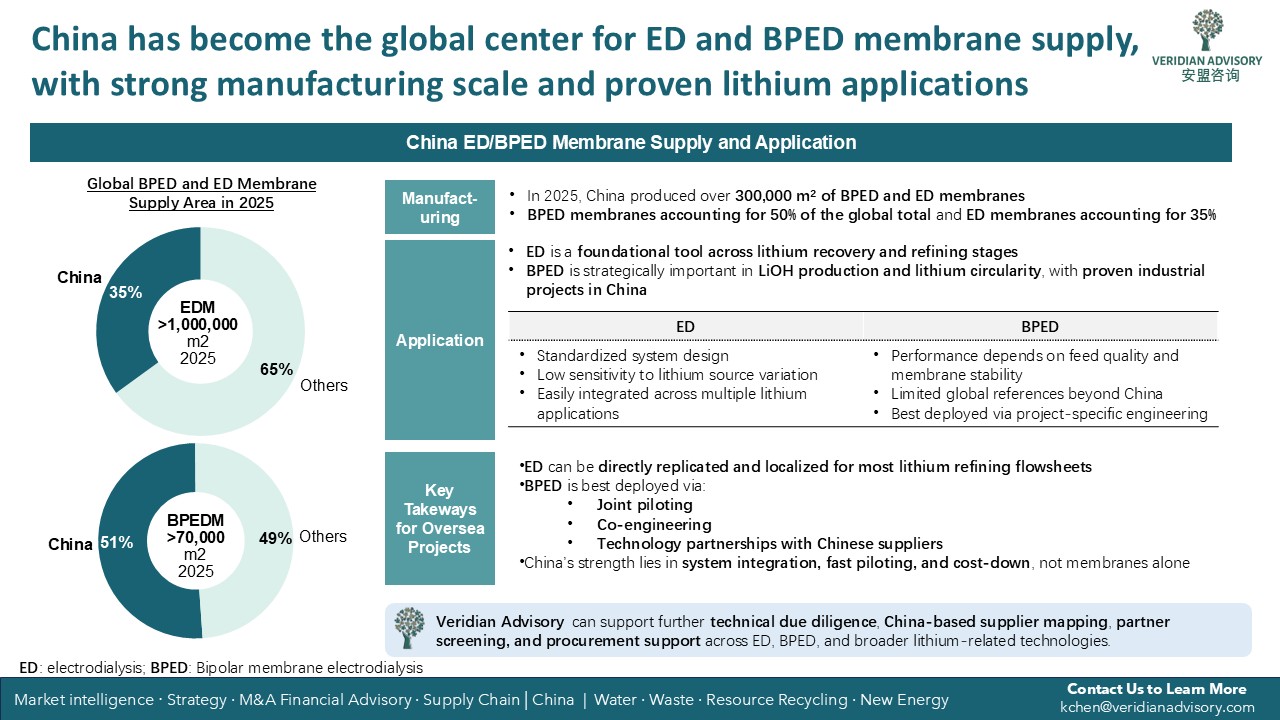
China has become the global center for ED and BPED membrane supply
Chinese producers now account for the majority of global electrodialysis membrane output, and the technology sits at the centre of lithium recovery and refining.
- China is the global center for ED and BPED membrane supply, producing more than 300,000 m² in 2025.
- ED is a foundational tool across lithium recovery and refining, with standardized design and easy integration.
- BPED is strategically important for LiOH production and lithium circularity, but performance depends on feed quality and membrane stability.
- China’s advantage lies in system integration, fast piloting and cost-down, with BPED best deployed through joint piloting and co-engineering.
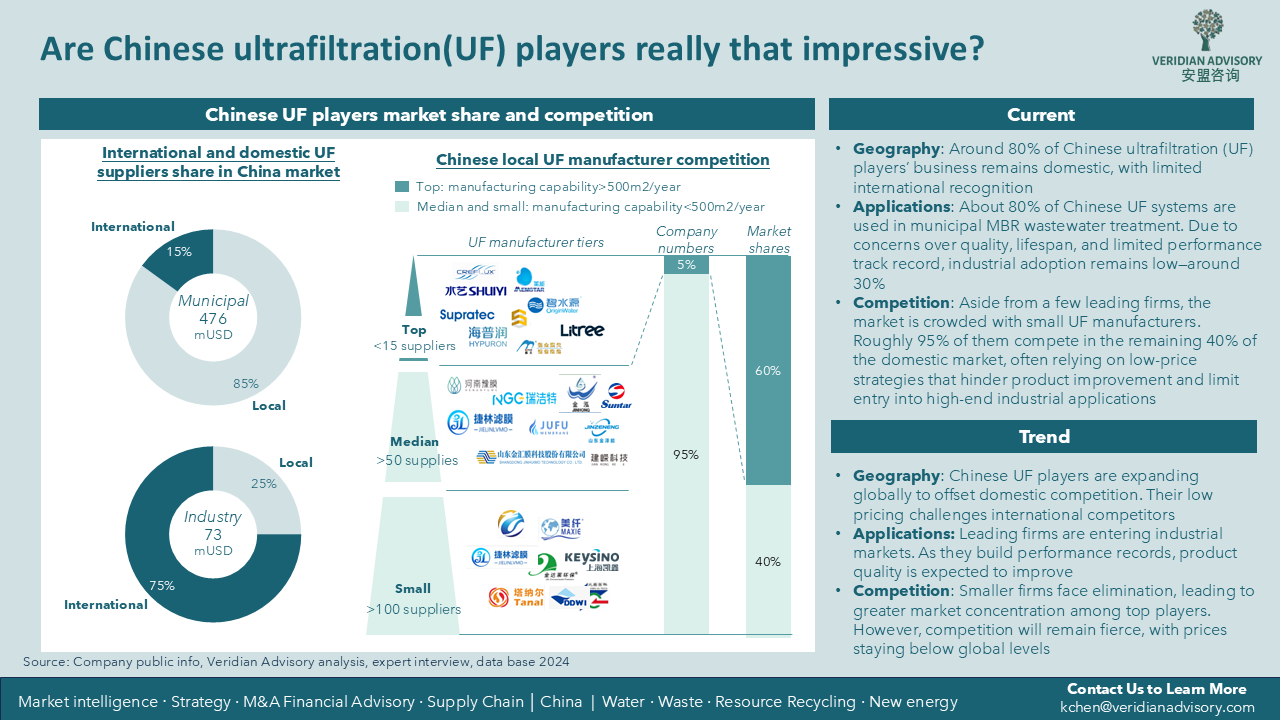
Are Chinese ultrafiltration (UF) players really that impressive?
Domestic competition is pushing Chinese UF suppliers abroad, and their pricing is reshaping what international competitors can hold.
- Geography: Chinese UF players are expanding globally to offset domestic competition. Their low pricing challenges international competitors.
- Applications: Leading firms are entering industrial markets. As they build performance records, product quality is expected to improve.
- Competition: Smaller firms face elimination, leading to greater market concentration among top players. Competition will nonetheless remain fierce, with prices staying below global levels.
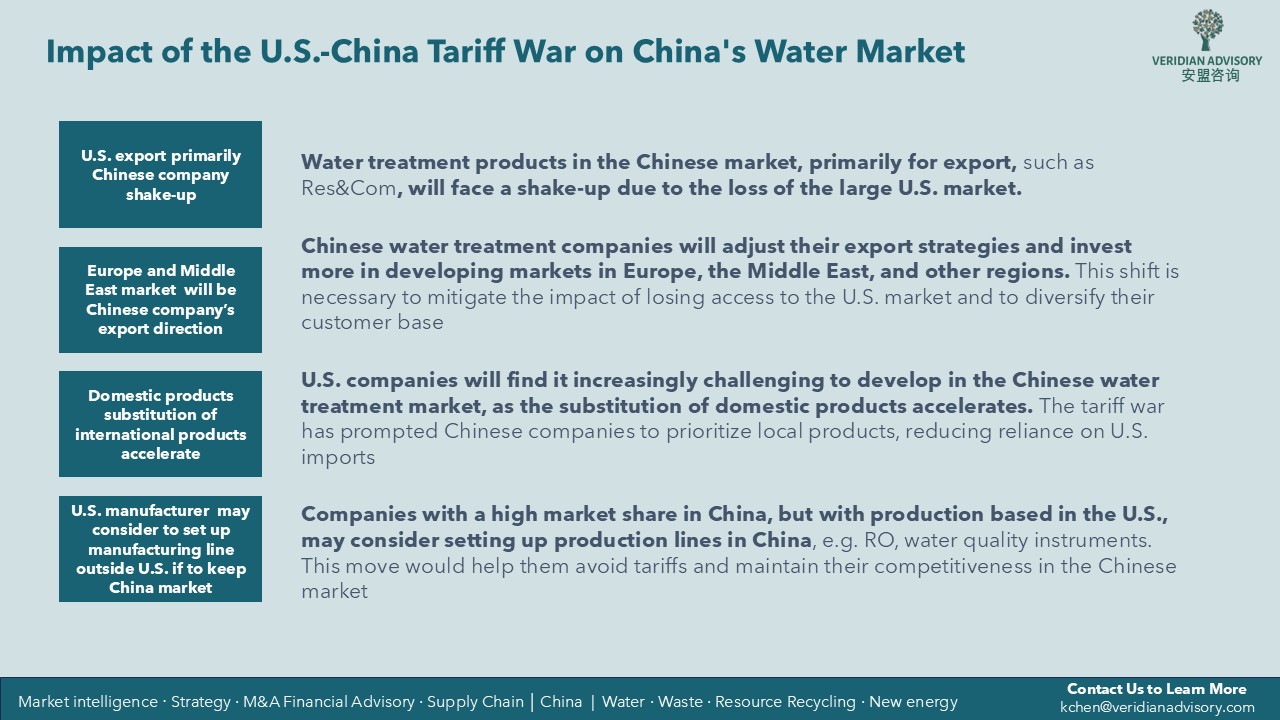
Impact of the U.S.–China tariff war on China’s water market
Tariffs are redirecting Chinese export flows and accelerating domestic substitution — with consequences for anyone selling into or out of China.
- U.S. exports face a shake-up for Chinese companies.
- Europe and the Middle East will become the main export direction for Chinese players.
- Domestic substitution of international products is accelerating.
- U.S. manufacturers may consider setting up manufacturing lines outside the U.S. in order to keep the China market.
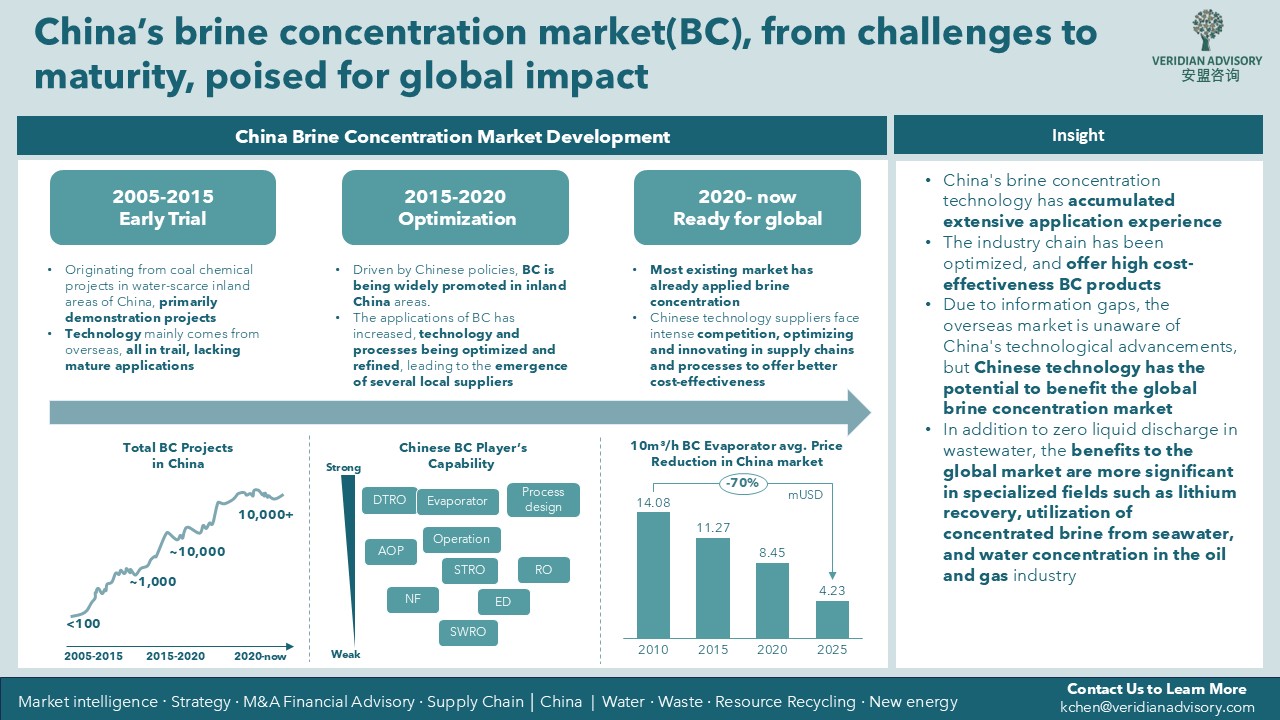
China’s brine concentration market, from challenges to maturity, poised for global impact
An information gap keeps overseas buyers from seeing how far Chinese brine concentration technology has come — and where it could be applied.
- Due to information gaps, the overseas market is unaware of China’s technological advancements, but Chinese technology has the potential to benefit the global brine concentration market.
- Beyond zero liquid discharge in wastewater, the benefits to the global market are more significant in specialized fields such as lithium recovery, utilization of concentrated brine from seawater, and water concentration in the oil and gas industry.
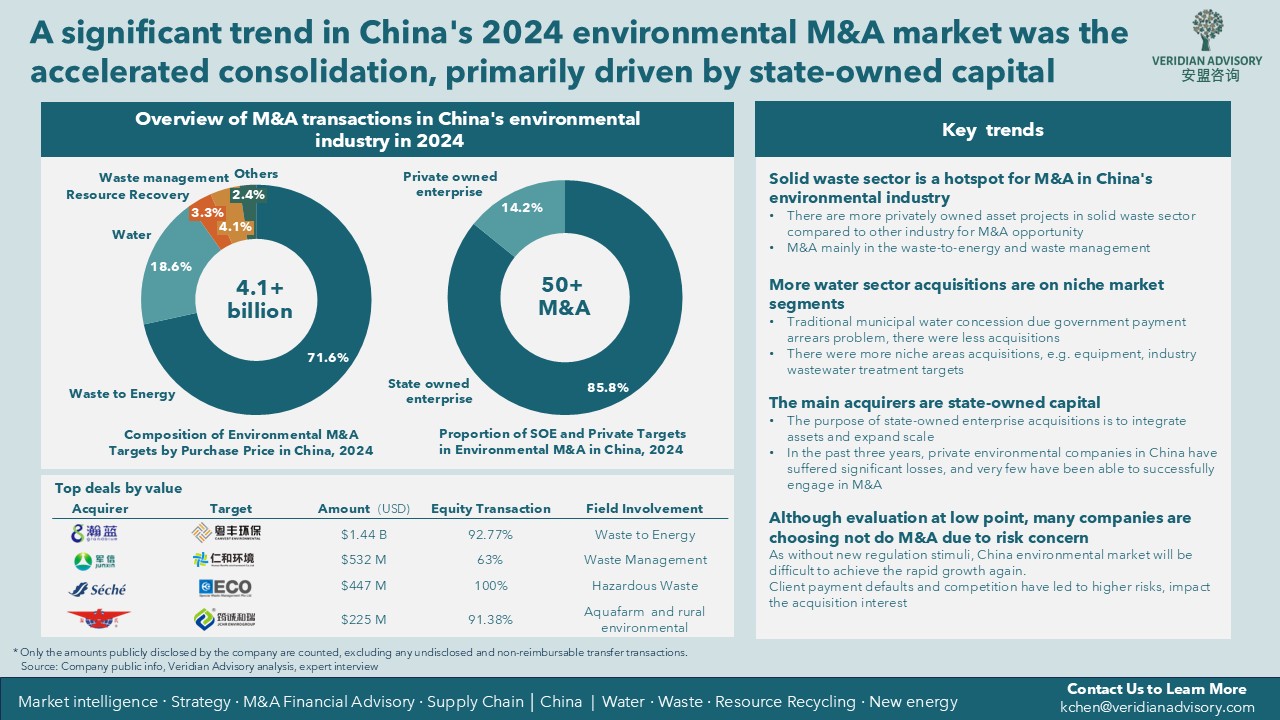
China’s 2024 environmental M&A market: consolidation driven by state-owned capital
Deal activity concentrated around solid waste and niche water segments, with state-owned buyers setting the pace.
- The solid waste sector is a hotspot for M&A in China’s environmental industry.
- More water sector acquisitions are happening in niche market segments.
- The main acquirers are state-owned capital.
- Although valuations are at a low point, many companies are choosing not to pursue M&A because of risk concerns.
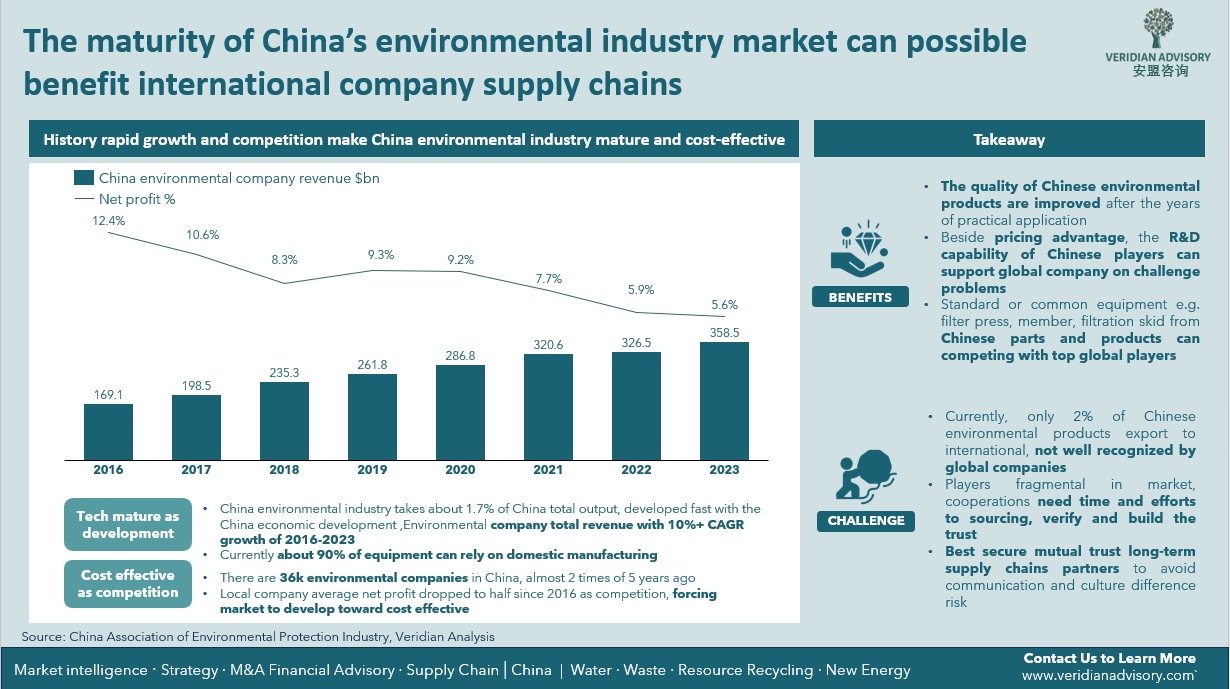
The maturity of China’s environmental industry can benefit international company supply chains
Years of field application have lifted product quality, and the R&D side is now capable of solving problems rather than just quoting a lower price.
- The quality of Chinese environmental products has improved after years of practical application.
- Beyond the pricing advantage, the R&D capability of Chinese players can support global companies on challenging problems.
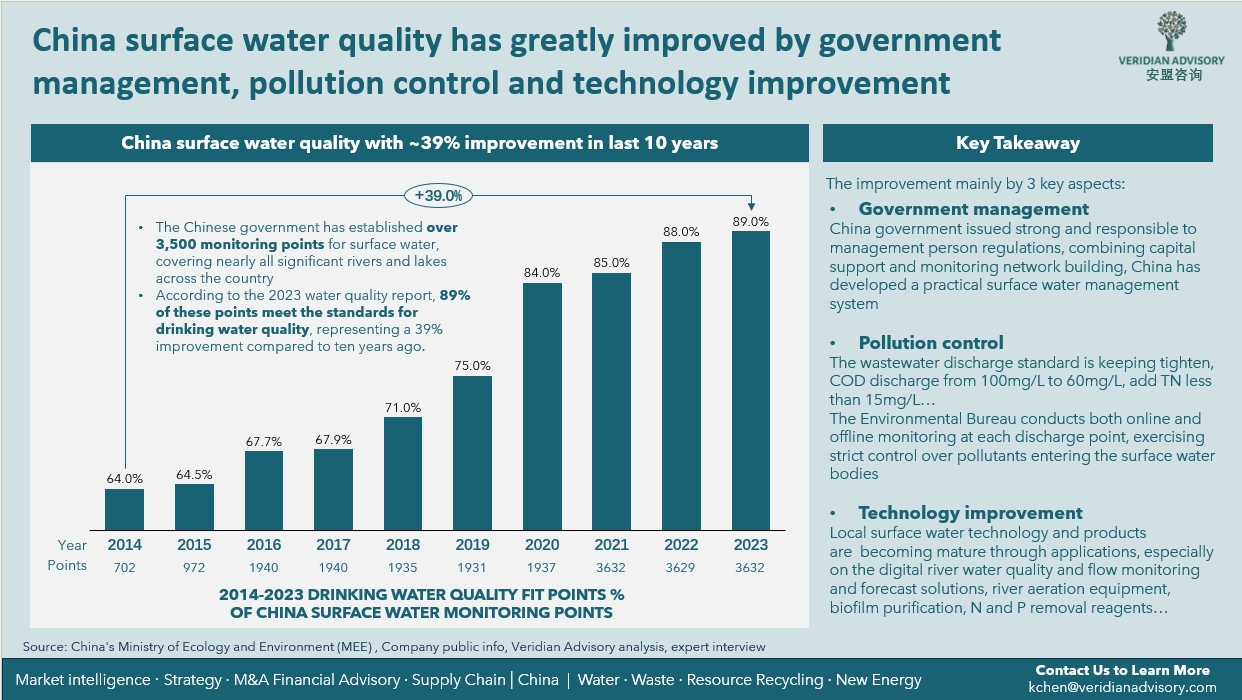
China’s surface water quality has greatly improved
Government management, pollution control and technology improvement together account for most of the gains recorded over the past decade.
- Government management — tighter targets, monitoring and enforcement.
- Pollution control — sustained investment in municipal and industrial treatment capacity.
- Technology improvement — better process design and equipment across the treatment chain.
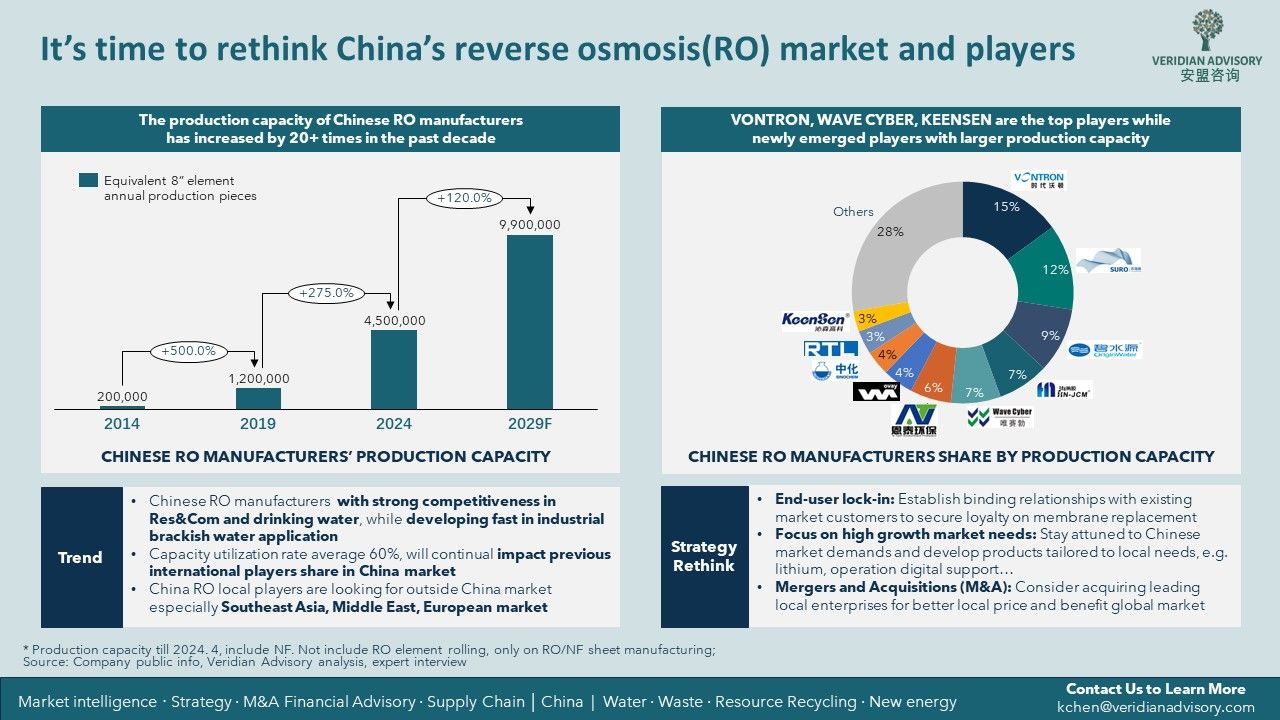
It’s time to rethink China’s reverse osmosis (RO) market and players
Chinese RO manufacturers have moved well past the entry-level segments, and spare capacity is pushing them outward.
- Chinese RO manufacturers are strongly competitive in residential, commercial and drinking water, and are developing fast in industrial brackish water applications.
- Capacity utilization averages around 60%, which will continue to erode the China market share previously held by international players.
- Chinese RO players are looking outside China, especially at Southeast Asia, the Middle East and Europe.
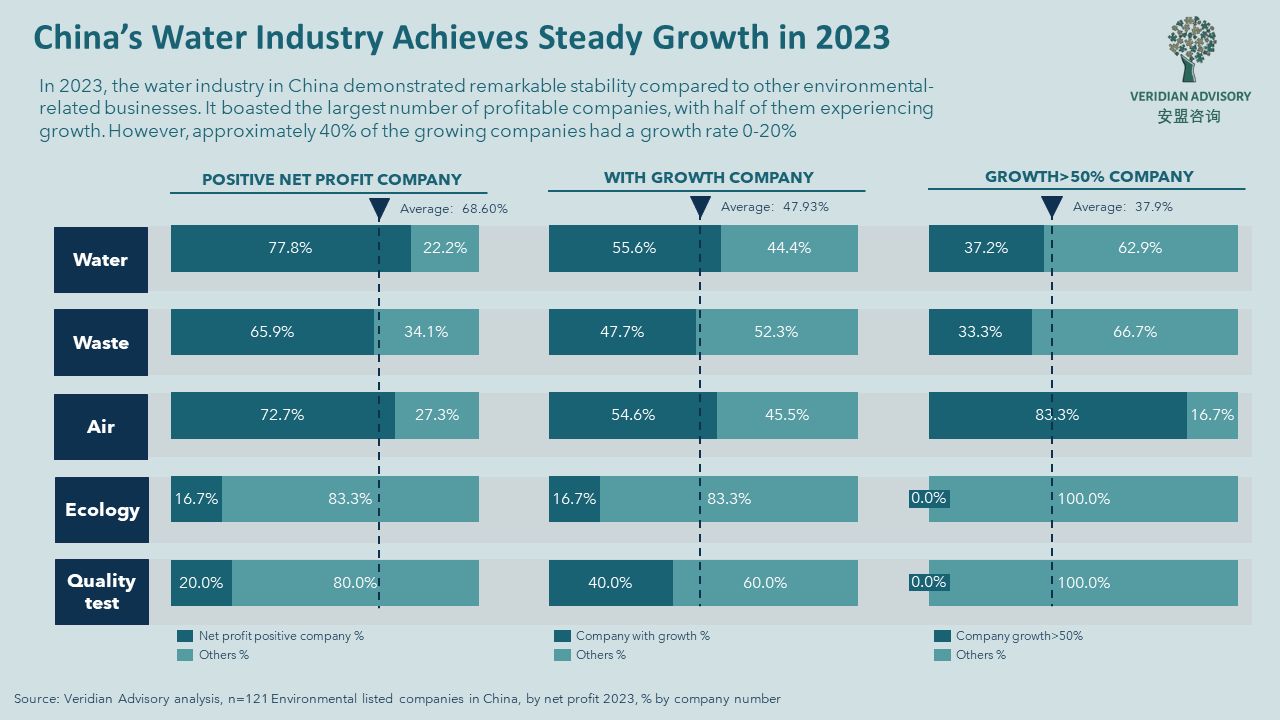
China’s water industry achieves steady growth in 2023
Water proved the most stable of China’s environment-related businesses in 2023, though growth was modest for most of the companies that had it.
- In 2023 the water industry in China was remarkably stable compared with other environment-related businesses.
- It had the largest number of profitable companies, with half of them growing.
- Roughly 40% of the growing companies had a growth rate between 0% and 20%.
Talk to us
Have any questions? We’re always happy to hear from you. Reach out today and let’s start a conversation.
1609 Tomson Building
710 East Dongfang Road, Pudong
Shanghai 200122, China
Alex Zhang
+86 139 0162 7668
azhang@veridianadvisory.com
Karen Chen
+86 138 1686 0769
kchen@veridianadvisory.com